
Control Systems in the Oilfield
Once power and signals are in place, you need something to make decisions, communicate those decisions, and present information to operators.
PLC
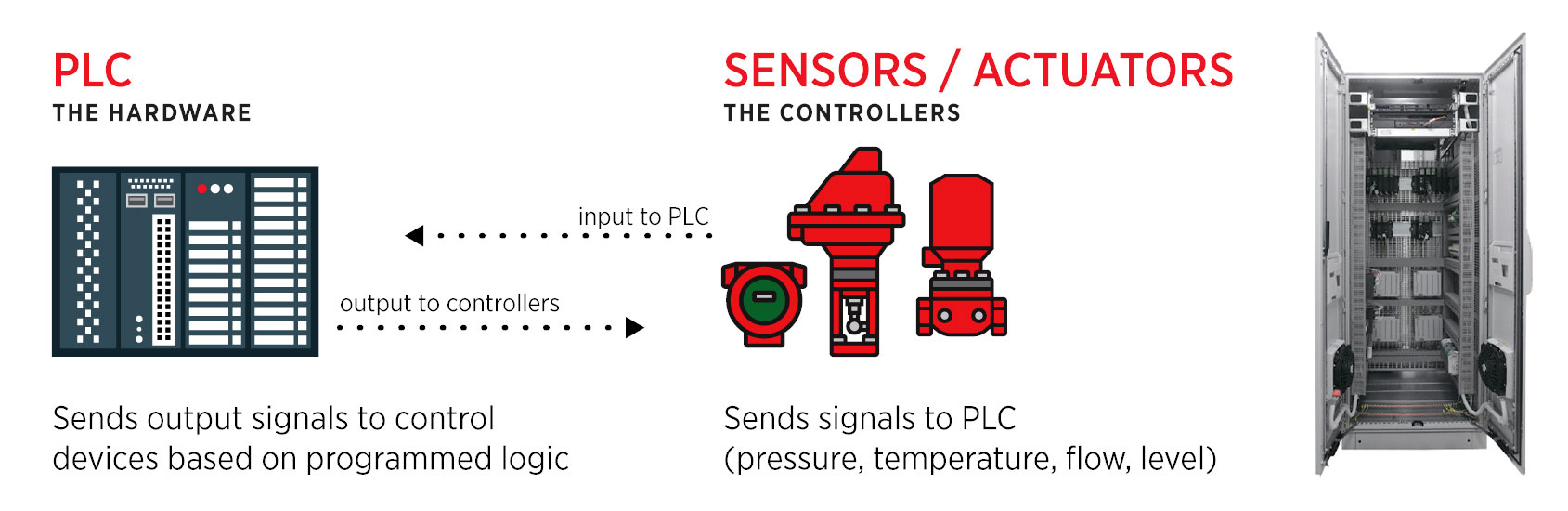
A Programmable Logic Controller, or PLC, is an industrial computer designed to operate reliably in harsh environments. It receives input signals such as pressure, temperature, flow, or level and sends output signals to control devices based on programmed logic.
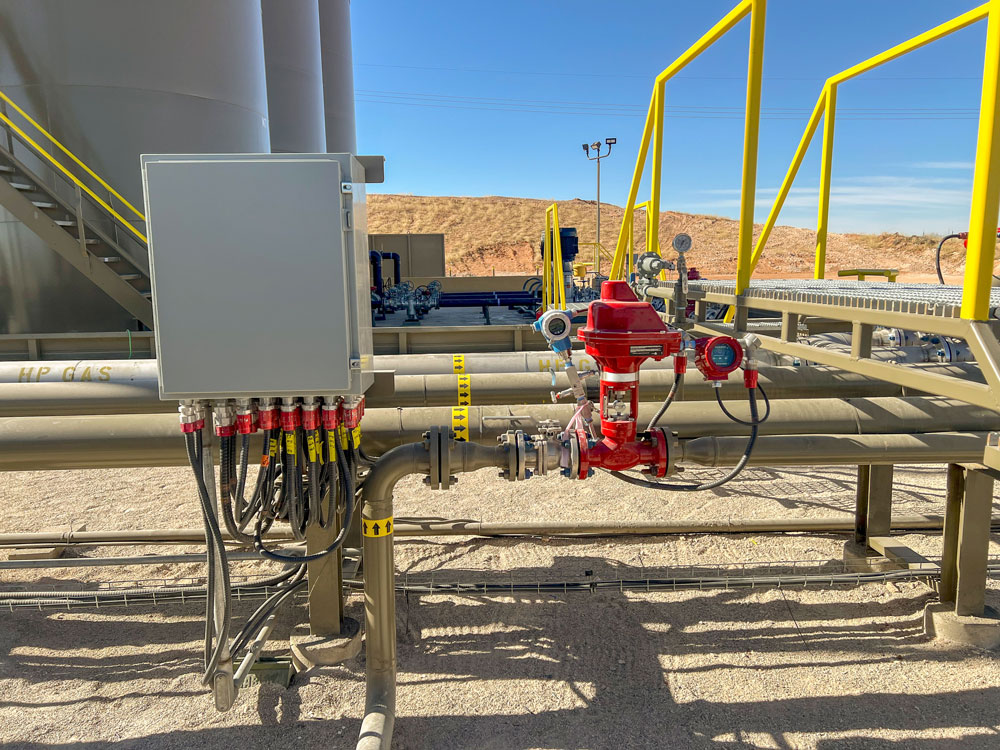 For example, a PLC monitors separator pressure and when pressure rises above a setpoint, it opens a control valve. If pressure continues to rise, it may shut down upstream equipment.
PLCs typically are on-site, close to the equipment they control. They are built to run 24/7 and make decisions locally without needing constant operator input.
If communications go down, a PLC can often keep the process safe and stable on its own. That local autonomy is critical for protecting equipment and production.
RTU
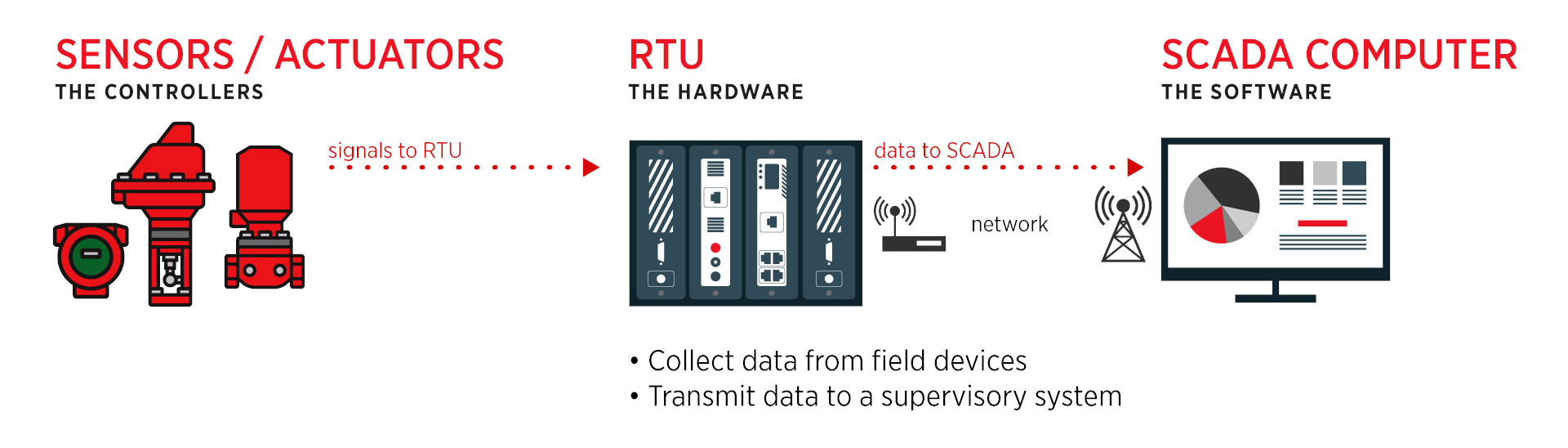
RTUs (Remote Terminal Units) serve a similar purpose to PLCs but are optimized for remote locations and low-power operation. They’re more commonly found at wellheads, tank batteries, and solar-powered locations.
They collect data from field devices and transmit it back to a supervisory system, typically SCADA, using radio, cellular, or satellite communications. Without an RTU, operators must physically visit sites to see conditions or make changes.
Modern RTUs can perform significant local control when needed but often prioritize data collection and communication over fast, complex control logic.
PLC vs RTU
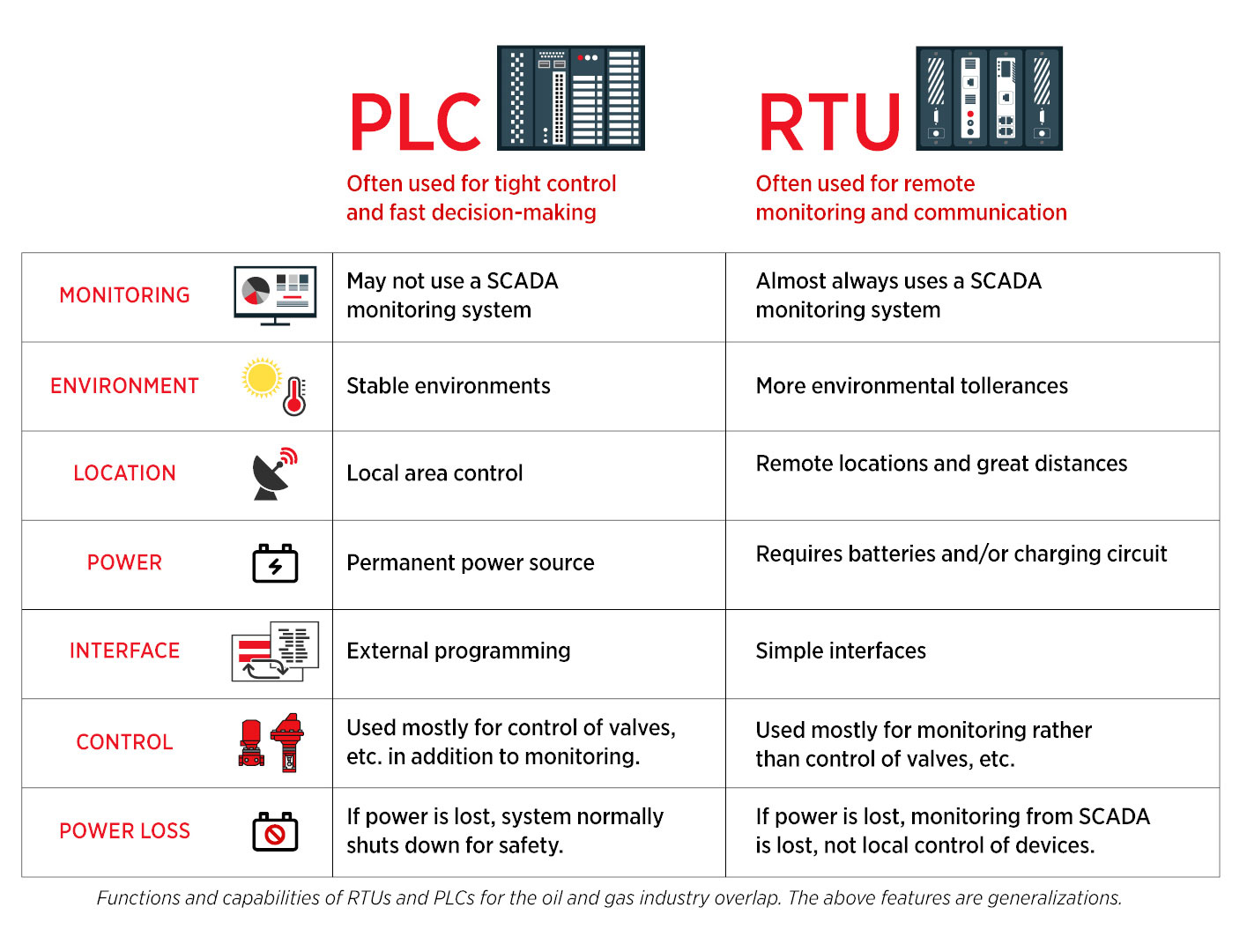
At many sites, the distinction between PLC and RTU is blurred.
- PLCs are often used for tight control and fast decision-making
- RTUs are often used for remote monitoring and communication
- A PLC may feed data to an RTU
- An RTU may perform basic PLC-like control
HMI
HMI (Human-Machine Interface) is a general term for the screens, buttons, and alarms that operators use to observe data and send commands. This may be a touchscreen panel at the site, a computer in a control room or a laptop connected to SCADA.
The HMI does not control the process but sends commands to the PLC or RTU. They show information and accept commands.
When you understand all these principles and terms together, electrical systems look less intimidating and instead become tools you can reason through and troubleshoot.
Voltage, Current, Resistance, Power & Ohm's Law