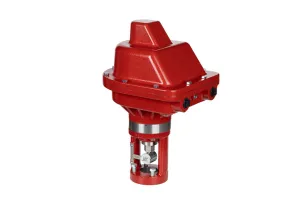
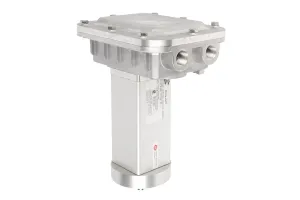
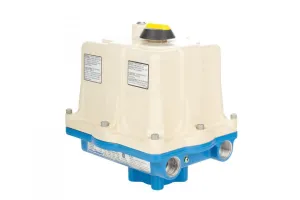
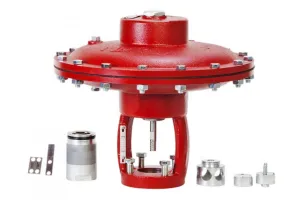
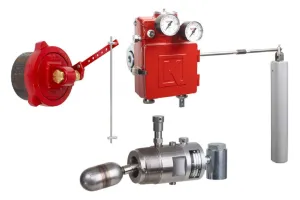
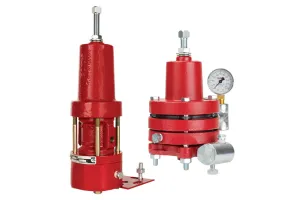
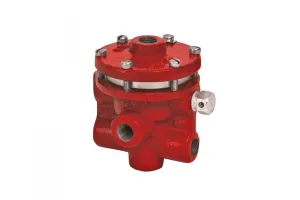
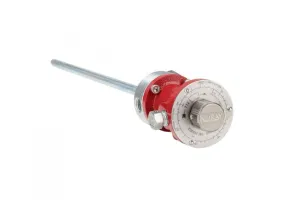
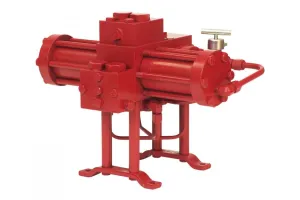
We've outlined six key factors to consider when selecting an electric valve actuator to help you decide which is appropriate for your operation. We'll compare these factors in the three electric actuator models we offer:
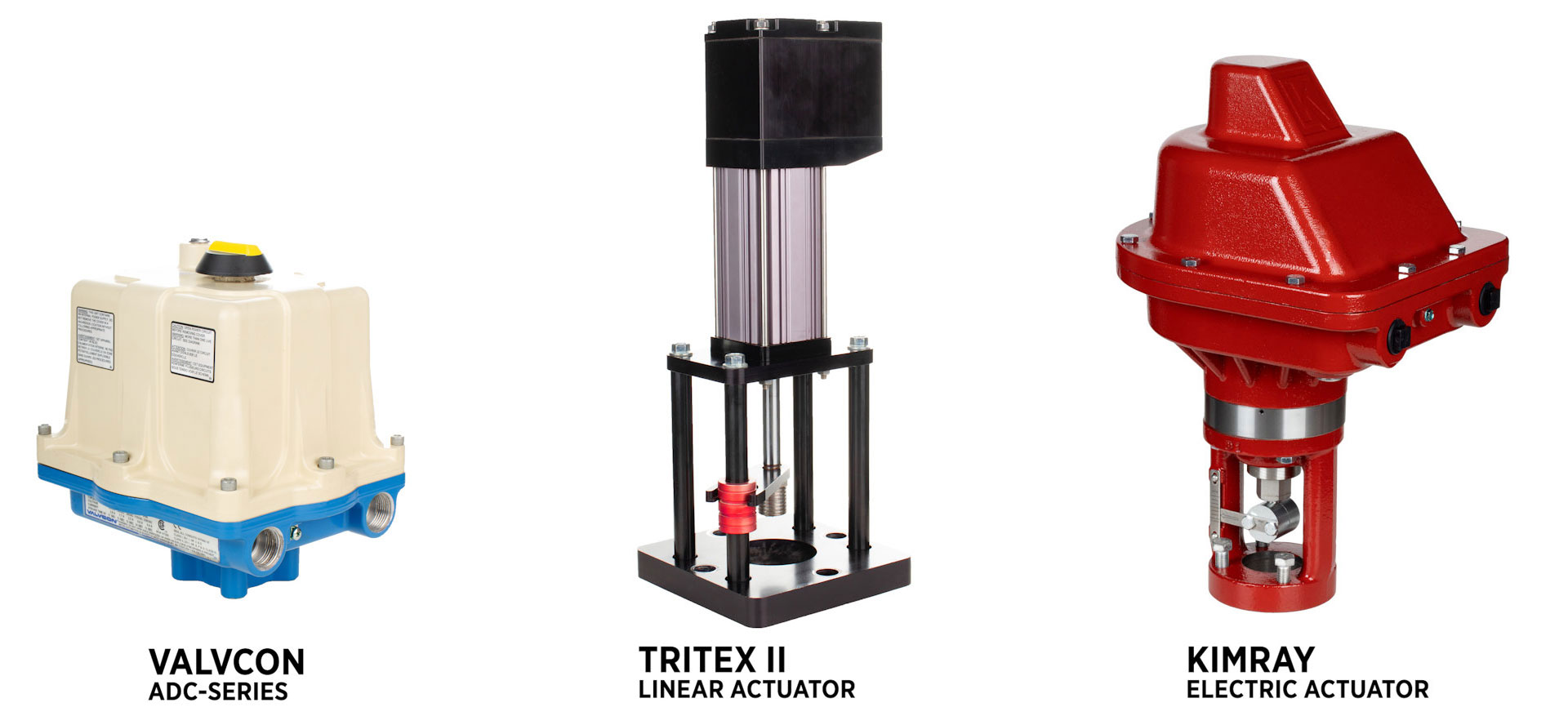
- Valvcon Actuator
- Tritex II Actuator (now Tritex EVA)
- Kimray's Electric Actuator
1. Motion Type & Mount Requirements

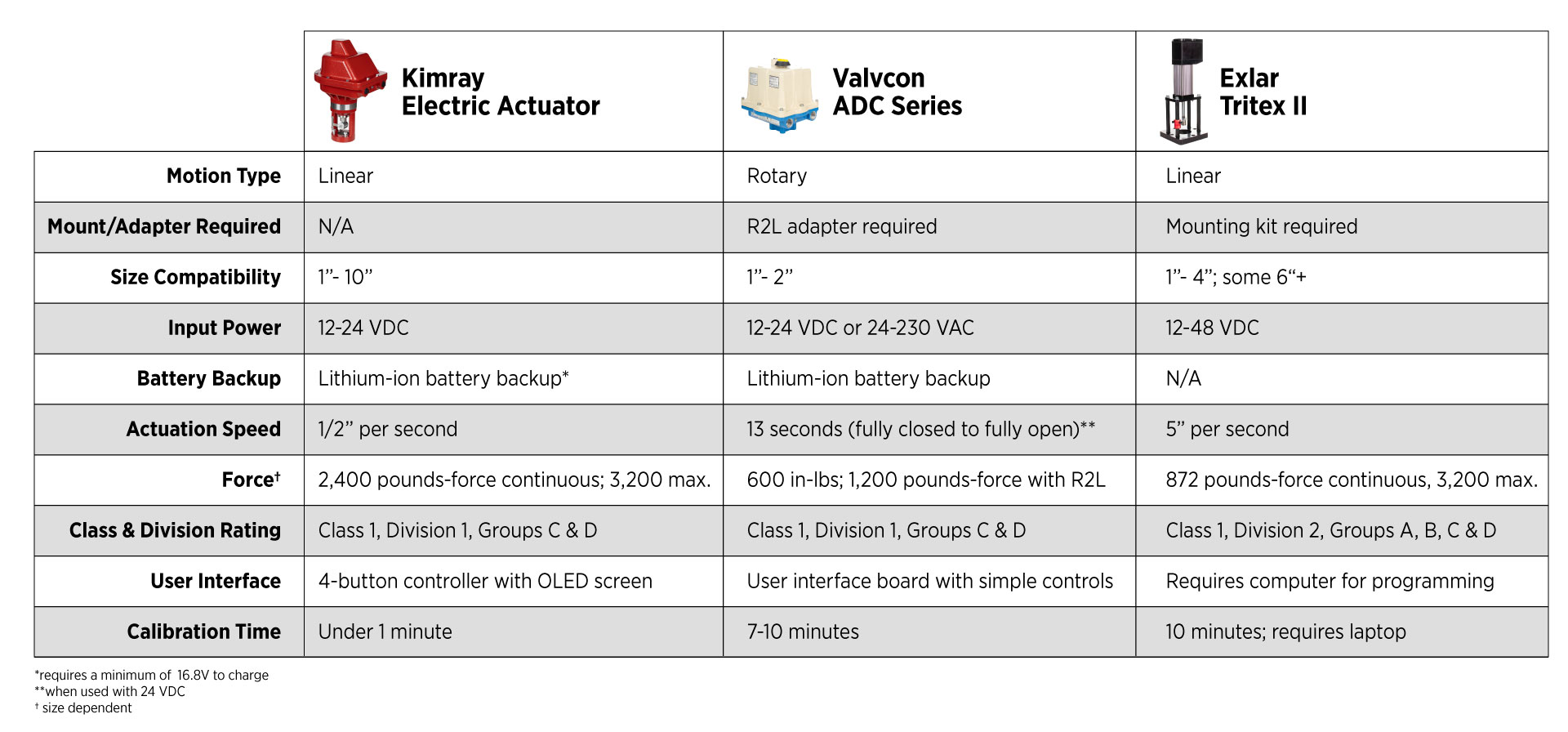
Based on their motion, electric actuators are either rotary or linear. Neither motion has a true advantage, but rather different ways the internal components operate. However, Kimray control valves use linear motion, so a rotary actuator must use an adapter.
Valvcon
The Valvcon, for example, is a rotary actuator. It requires a rotary-to-linear adapter to actuate a high pressure control valve stem. It’s ideal for most applications with 1-2” valves.
Tritex II
The Tritex is a linear actuator and actuates in a straight line up and down. However, it also requires a mounting kit that comes in various sizes depending on your valve body. It is available for all Kimray high pressure control valves from 1-4” and can be used on some 6” and larger valves.
Kimray Electric Actuator
The Kimray Electric Actuator is a linear actuator and can be installed directly on a linear globe valve without an adapter or mounting bracket. It is available in four models and works on all control valve bodies from 1-10”.
2. Input Power & Battery Backup

Valvcon
The Valcon has universal voltage and can use 12-24 VDC or 24-230 VAC. It also has a lithium-ion battery backup.
Tritex II
The Tritex operates with 12-48 volts DC and does not have battery backup. If there’s a loss of power, it will fail in place. However, it has fail-safe positioning and if a low bus voltage limit is reached or loss of signal is detected, it will move to a desired setpoint position.
Kimray Electric Actuator
The Kimray Electric Actuator operates using 24 VDC and has a lithium-ion battery backup, which requires a minimum of 16.8 volts to charge. If you’re using 12 volts, the battery backup will not be applied.
3. Actuation Speed

Valvcon
The Valvcon can actuate fully closed to fully open in 13 seconds when used with 24 VDC. This time will vary depending on your power source.
Tritex II
The Tritex has actuation speeds up to 5 inches per second of linear stem travel. This is ideal for applications where actuation speed is crucial, but for oil and gas applications, this kind of speed is not used.
Kimray Electric Actuator
The Kimray Electric Actuator has actuation speeds up to 1/2" per second, ideal for both liquid and gas control applications.
4. Force

Force is needed to open or close a valve from the seat. Larger valves and higher volumes have more pressure on the seat and therefore require higher force.
Valvcon
Since the Valvcon is a rotary actuator, it has a maximum torque output of 600 inch-pounds. When combined with the Kimray R2L Adapter making it a linear action, it can reach 1,200 pounds-force of thrust.
Tritex II
The Tritex II continuous thrust is 872 pounds-force, with a peak thrust output of 1,190 pounds-force.
Kimray Electric Actuator
The Kimray Electric Actuator continuous thrust is 2,400 pounds-force, with a maximum output of 3,200 pounds-force. This makes it the best option for larger valves and higher production volumes.
5. Class & Division Ratings

Valvcon
The Valvcon ADC actuator is available with hazardous location enclosures (ADCWX and LADCWX) which are certified by CSA to meet many regulations including:
- Enclosure protection standards: NEMA 4/4X/7 & 9
- Hazardous-location classification for flammable gases and vapors: Class I, Div 1, Groups C & D
- Classification for combustible dusts: Class II, Div 1, Groups E, F, & G
- Locations where flammable fibers are present: Class III
Tritex II
The Tritex II has a Class 1, Div 2, Groups A, B, C, and D rating. This simply means it is safe to use in places where:
- flammable gases might leak, but aren’t normally there
- and any of the major hazardous gases (acetylene, hydrogen, ethylene, propane) could be present during a failure condition.
Kimray Electric Actuator
The Kimray Electric Actuator has a high-hazard classification with a Class 1, Division 1, Groups C and D rating, meaning it’s safe to use in places where:
- Flammable gases/vapors are normally present
- The likely gases are ethylene (Group C) or propane/natural-gas-type vapors (Group D)
It also has a T6 Temperature Code rating meaning it will never exceed 185°F (85°C) and can safely be used around gases/vapors with low ignition temperatures.
6. User Interface

Valvcon
The Valvcon features a user interface board with simple controls. Everything is labeled right on the board, and there is no computer programming involved. Calibration and setup require a basic understanding of the controls, adjusting cams, limit switches, and calibrating the potentiometer.
Tritex II
The Tritex requires a computer to program. This adds a level of complexity and specialized training to calibrate and set up but also gives the user more custom controls.
Kimray Electric Actuator
The Kimray Electric Actuator has a four-button controller and an OLED screen, which allows quick set up and calibration. The user can choose between automatic or manual calibration. Calibration only requires a single button input and can be completed in about 35 seconds on a 2” valve body. Manual calibration can be used to calibrate the travel limits of the actuator to the users specifications.
To speak with an expert about choosing the right actuator for your operation or other zero emission solutions, contact your local Kimray store or authorized distributor.